
 By Admin
Last updated: October 21, 2026
Key Takeaways
- Back up first and give the skunk at least 30 feet of space.
- Use light and an open path so the skunk can leave on its own.
- Keep away from the skunk, don’t block its exit, and never try to herd it by hand.
- Motion-activated lights work best when they surprise the skunk from above or the side.
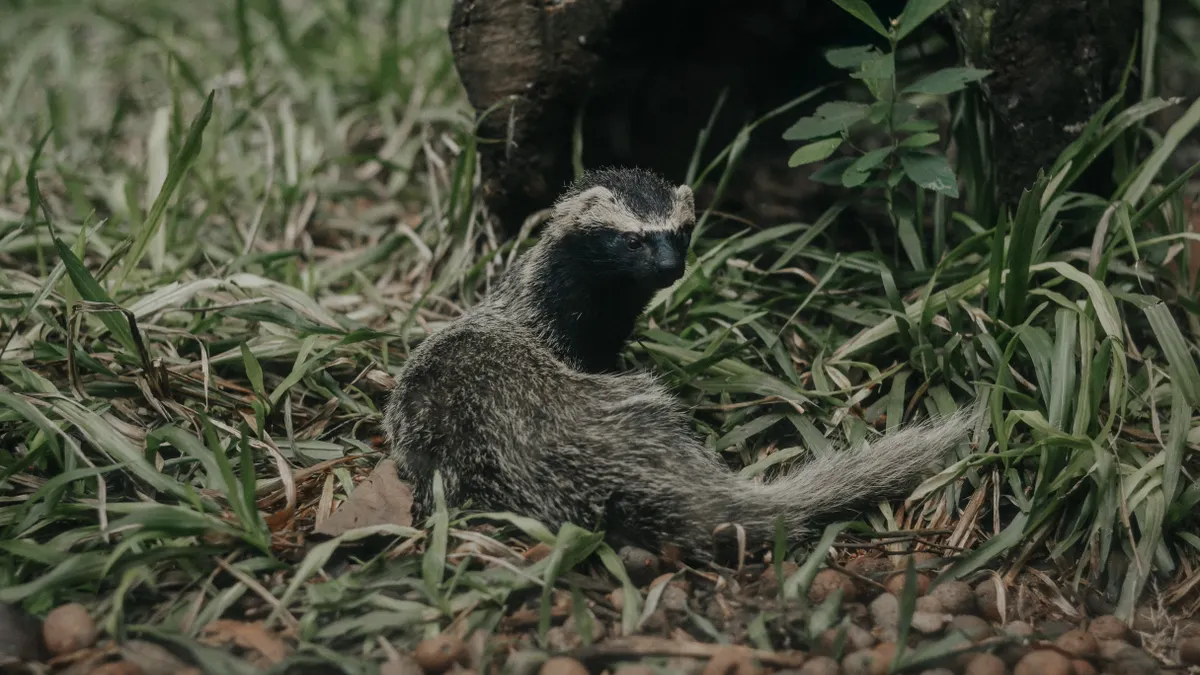
A skunk gets out of a yard without spraying when the yard stops feeling like a hiding place and starts feeling exposed. This guide to How to Get a Skunk Out of the Yard Without Spraying starts with calm distance, light, and a clear exit path—rather than chasing, cornering, or throwing things.
What to do first when you spot a skunk in the yard
Start by backing up and giving the skunk at least 30 feet of space. That distance matters because a skunk usually sprays when it feels trapped, startled, or forced to defend a narrow escape route. Keep children, dogs, and cats inside, and close any fence gate or side yard access so nobody wanders into the same space.
Then look at the skunk’s position before you move anything. If it is crossing open grass, the best outcome is often to do almost nothing and let it leave on its own within a few minutes. If it has stopped near a deck, porch, shed, or garbage cans, you need to make the area feel less useful and more exposed without walking toward it.
The wrong first move is rushing outside with a shovel, hose, broom, or flashlight held low. That turns a skunk encounter into a close-range problem. The right first move is to stay still, keep voices low, and avoid sudden motion. If the animal is already facing away from you and not hunching, stamping, or lifting its tail, there is a good chance it has not yet escalated.
This is also the moment to decide whether the yard issue is simple or structural. A one-time skunk crossing an open lawn is one thing. A skunk using the same space nightly because of a porch enclosure, deck gap, or unsecured garbage cans is another. In that case, it may be wise to consult a wildlife professional after the animal leaves so the barrier issue is handled safely.
If the skunk is under a porch or trapped beside a fence, stop trying to drive it out with noise alone. That kind of pressure often pushes it to hold position instead of leaving. The better answer is to make the route out obvious and leave it room to take it.
How do I make a skunk leave without spraying?
Use light, distance, and a clear opening so the skunk can walk away on its own. The core idea is to remove the reasons it wants to stay while avoiding the one thing that makes it spray: feeling cornered.
- Stay inside a doorway, window, or at the far edge of the yard and watch where the skunk is headed. If it is already moving away, do nothing for 5 to 10 minutes and let it finish.
- Turn on one or more motion-activated lights if the yard has them. A sudden bright wash from a porch light, garage light, or path light often makes the area feel less comfortable without forcing direct contact.
- Clear a visible exit path by opening a gate or removing a temporary obstacle such as a trash bag, lawn chair, or bin that is blocking the skunk’s easy route. If the animal can see open ground, it is more likely to move.
- Watch for a change in posture. If the skunk turns broadside, lowers its tail, and begins walking slowly instead of stamping or lifting its back end, the pressure is dropping and you are on the right track.
- If it leaves the yard, keep the area quiet for another 10 to 15 minutes so it does not circle back immediately.
A motion sensor light is more useful than a person walking straight at the skunk because the light changes the space without a physical threat. That matters in open yard space, where a skunk usually has room to choose an escape direction if it is not being pinned to a fence line.
Avoid lawn sprinklers, stones, tennis balls, or shouting. Those tactics can create a faster retreat in some cases, but they can also raise the odds of a defensive spray if the skunk is already tense. A bad outcome looks like repeated foot-stamping, tail raising, freezing in place, or a sudden sideways turn toward you. If you see those signs, stop everything and increase distance.
This approach is not for a skunk that is acting sick, staggering, or staying out in the open in daylight for a long stretch. That is a separate problem and should be handled more cautiously, with local animal control or a wildlife professional if needed.
What should I not do if I want to avoid spray?
Do not approach within a few feet, block the skunk’s only exit, or try to herd it by hand. Those are among the quickest ways to create a spray event, and they also make the animal more likely to keep using the same yard if it learns the place is full of pressure but no barrier.
A common mistake is shining a bright flashlight directly into the skunk’s face from close range. That can work like a challenge signal instead of a deterrent. A better move is indirect light that brightens the whole area, such as a porch light, garage light, or motion-activated fixture mounted high enough to spread light across the yard.
Another mistake is letting a dog out “just to see what happens.” A dog can turn a quiet skunk problem into a full-yard conflict in seconds, and the dog usually loses that contest. Keep pets inside for the entire episode, then check the yard before releasing them later.
Do not use a hose unless you are far away and the skunk is already moving off under its own power. A sudden blast of water may spook it into spraying. The same warning applies to loud banging on metal pans or pounding on the deck boards under a porch enclosure.
If the skunk is near garbage cans, do not tip or drag them while it is still in the yard. Garbage cans are a common draw because of food scent, and moving them too soon can trap the skunk between the cans and the person moving them. If you are unsure whether it is safe to secure them, wait until the animal leaves or consult a wildlife professional.
The cost of doing it wrong is not just a smell problem. Once a skunk sprays near the house, the odor can linger on siding, concrete, clothing, and pet fur. Avoiding that outcome is usually easier than trying to clean it up later.
Use motion-activated lights and quiet distance tactics
Motion-activated lights work best when they surprise the skunk from above or to the side, not from your hand. A light mounted near a porch, garage, or fence line changes the yard without putting a person in the animal’s path. If the fixture comes on and the skunk pauses, that is normal. If it resumes moving, let it go.
Quiet distance tactics are simple: stay still, keep your voice down, and let the animal choose the route. A skunk in open yard space usually does not need a dramatic intervention. It needs an unthreatening way out. The more you move toward it, the more likely it is to stop and assess you as a threat.
If the animal is near a porch enclosure, do not stand in the opening and talk to it. That creates a bottleneck. Step back so the opening remains wide, and wait. If there is more than one possible exit, leave both open instead of funneling it into the nearest corner.
What you want to see is forward motion: slow walking, nose to the ground, tail down, no stamping. What you do not want to see is a fixed stance with the back end angled toward you, because that is often a warning posture. If you get that warning, increase the distance rather than trying to “finish the job.”
This is also where neighborhood conditions matter. In colder months, skunks may use sheltered spots under decks, sheds, or porch enclosures more often. In dry weather, they may cross lawns toward water or trash. A yard with dense shrubs, wood piles, or low fencing can hold a skunk longer than a wide, open lawn because it offers cover and multiple escape angles.
If you have motion lighting already, test it in daylight so you know which zones it covers. A single bulb aimed at the wrong side of the yard can leave the skunk hidden in the darkest corner, which is the opposite of what you want.
Blocking access to under-porch spaces after the skunk leaves
Seal the opening only after you are certain the skunk is out and will not be trapped inside. This matters because blocking a live animal under a porch enclosure can turn a simple yard problem into a much bigger removal job.
First, inspect the underside of the porch, deck, or step area from a safe distance. Look for a clear burrow opening, disturbed soil, or a worn path along the fence line. If the space is being used regularly, the fix is not a pile of loose boards. It is a barrier that leaves no gap large enough for a skunk to push through.
A practical screen is sturdy wire mesh fastened low to the ground and buried or bent outward at the bottom so the animal cannot nose underneath. The usual weak points are gaps at the base of fencing, under lattice, and around skirting. If your fence is already low or has a missing board, that opening may be the route the skunk used in the first place.
Do not seal the space in the middle of the day if you still see signs the skunk may be inside. A bad closure job means you either trap the animal or create a new digging point a few feet away. That costs time and usually creates more damage than the original problem.
Garbage cans should also be part of the fix. Tight lids and a storage spot that is not right next to the porch reduce the chance that the skunk comes back to forage near the house. If the cans are the draw, moving them even 10 to 15 feet away can change where the animal chooses to enter the yard.
The goal is a yard that looks open, bright, and unrewarding. A skunk does not want a fight; it wants cover, food, and an easy route. Take away the cover and the easy route, and the visits usually drop.
When to stop and call a wildlife pro
Call a wildlife professional if the skunk will not leave after a reasonable wait, keeps returning to the same spot, or appears to be living under a porch, shed, or deck. That is the point where the job changes from “guide it out of the yard” to “inspect and exclude a structure,” and that second job is where people often make mistakes.
This is also the safer choice if the skunk is acting strangely in daylight, seems sick or injured, or is trapped in a narrow area where there is no clear path out. A pro can decide whether the problem is a simple trespasser or a more complicated den issue. If you are dealing with a local service business, ask how they plan to create an exit route, what they use to block under-porch access, and how they avoid trapping an animal inside.
Ask about the expected time on site. A simple yard visit may be short, while sealing a porch enclosure, checking a fence gap, or securing garbage-can attractants can take longer. The cost depends on access, the number of openings that need closure, and whether the skunk has already dug under the structure. A job that only needs observation and guidance is different from one that needs barrier work.
A bad job looks like this: the skunk is gone for the night but comes back because the opening was left in place, the porch gap was only partly blocked, or the yard still has a food source near the cans. Good work leaves no obvious return path.
For a broader overview of animal behavior and removal strategy, see the hub on wildlife removal by animal and behavior. This page stays focused on skunks in open yard space, where light, distance, and access control matter most.
Why do skunks spray?
Skunks spray to defend themselves when they feel trapped, threatened, or startled. The spray is a last-resort warning, not their first choice. In a yard, the risk rises when a person, pet, or loud noise removes the skunk’s escape route or crowds it too closely.
What scares a skunk away?
A skunk is most likely to leave when the yard feels open, bright, and quiet. Motion-activated lights, a clear exit path, and enough distance to avoid cornering it are the most useful deterrents. Loud chasing usually works against you because it increases the chance of a defensive spray.
Should I call animal control for a skunk?
Call animal control if the skunk is injured, behaving oddly in daylight, trapped, or creating repeated problems under a porch or around garbage cans. If it is simply crossing an open yard and leaving, you may not need a call. Local rules and response options vary, so check what your area handles before you wait too long.
Drafted with AI; not yet reviewed by a person.